
Radishes are one of the fastest maturing vegetables you can grow! Here is how you can grow your own radishes.
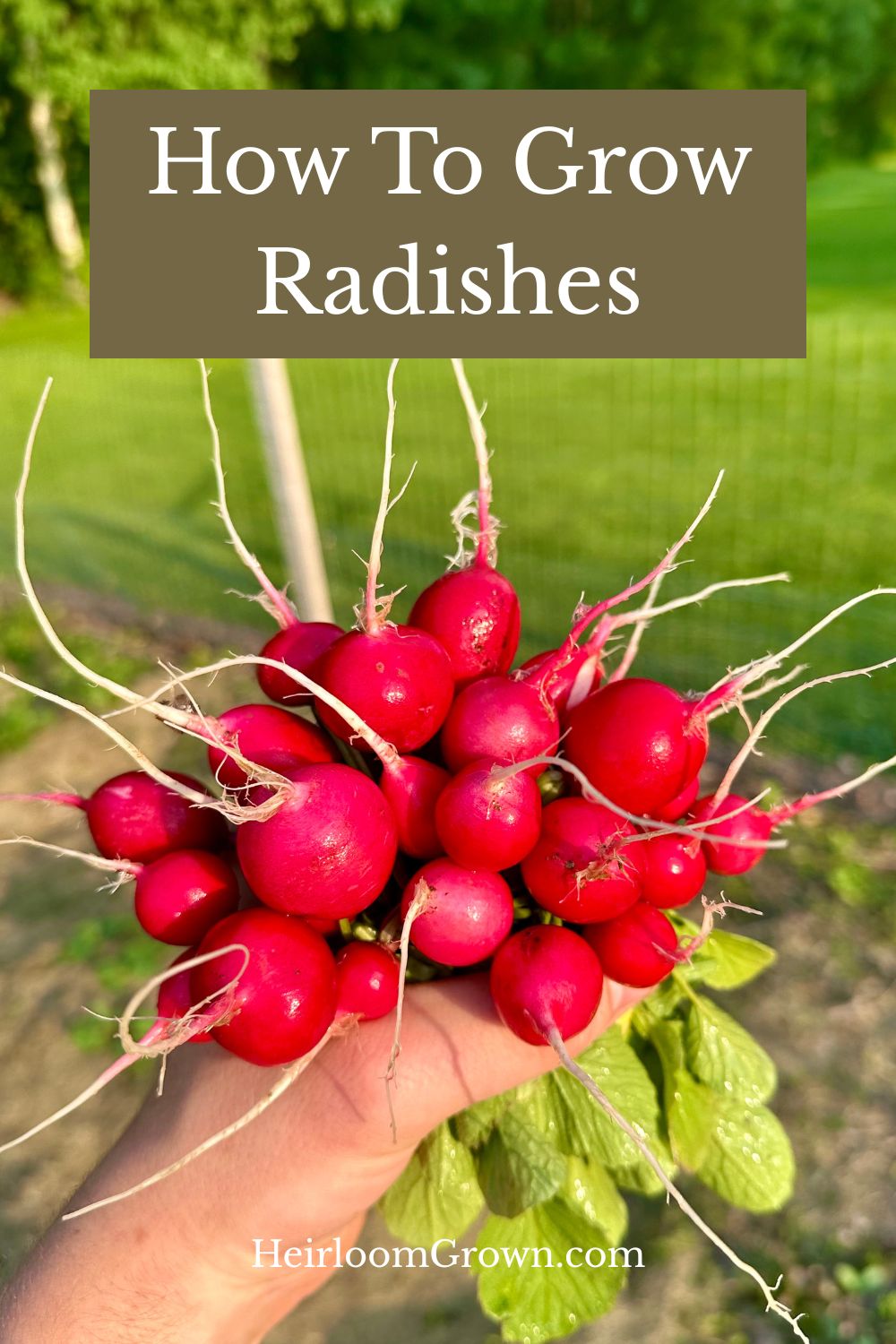
Radishes have been grown for thousands of years, and for good reason. Some radish varieties take just one month to grow, making them one of the fastest seed to harvest plants!
After my chives come up, radishes are usually second on the list of things I harvest in early spring. They are great to just eat fresh or include in salads.
The Best Conditions For Radishes
Radish plants like loose, fertile soil that is well draining. Loose soil, that stays consistently moist, will allow the radishes to grow large bulbs.
Don't be afraid to plant radishes early in the season as they can withstand frosts. I have found that radishes taste, and grow better in cool conditions.
Radishes do not like dry soil or sustained temperatures above 800F. If you want to grow them during the summer, plant them under your cucumber trellis.
When To Sow Radish Seeds
Always direct sow your radishes, and never transplant them. The plants have fragile root systems, so transplanting is of no advantage.
I start sowing my radish seeds a few weeks before my last frost date. They will sprout in cool conditions and they can handle light frosts.
If temperatures are consistently below freezing, I would wait to plant them.
Keep Sowing Radish Seeds!
If you want a continuous supply of radishes, keep planting those radish seeds. If you plant radishes a week apart until it gets too hot, you will have weekly radish harvests.
Radishes are a great crop to just tuck into empty garden spaces, so succession sowing is easy. They don't take up much space at all.
Thinning Radish Plants
Radish seeds are big compared to other root crops like carrots, so spacing them out is not hard. If you have plants that come up closer than 4 inches to each other, thin them out.
An average sized radish bulb should be about 2 to 3 inches in size. If you are growing a larger radish variety thin your plants accordingly.
Radish Plant Care
My spring radishes come up so quickly that weeds hardly stand a chance. Pests also seem to leave my radish plants alone.
Radish plants are pretty care free, but there are a few things you should do.
- Keep the soil consistently moist.
- Pull large weeds so they don't crowd the plants out.
- Check for bulbs occasionally.
It is paramount to keep your soil consistently moist! If the soil gets too dry, your radish bulbs will split and become very bitter.
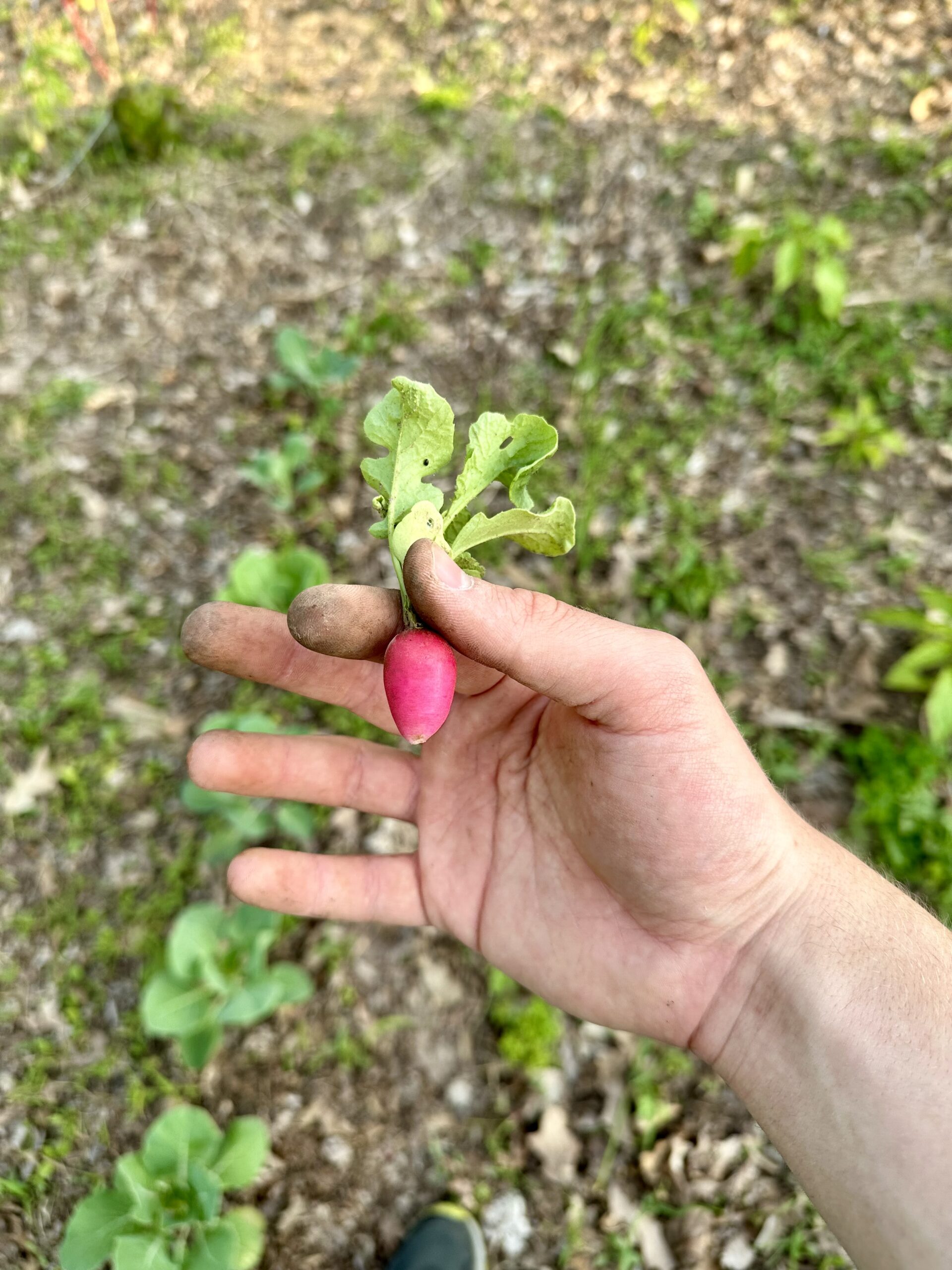
The key to crisp, juicy radish bulbs is consistent moisture, and cool temperatures.
When To Harvest Radishes
Once your bulbs get around 2 inches in size, it is time to harvest. It is important to check your bulbs, as they can grow rapidly.
Harvesting is easy, just pull your radish plants up by their tops. If your plants are being stubborn, you can also lift the soil with a pitch fork.
I have found that it is best to harvest your radishes early in the morning, because this is when they will have the mildest flavor.

Other Radish Growing Tips
Here are few other tips to growing great radishes.
Compost Before Planting
Compost is full of nutrients and beneficial microbes that help plants stay healthy. Add some finished compost to your planting area before sowing radishes.
Grow Radishes As A Catch Crop
Catch crops are grown in-between rows of larger crops, and harvested before the other crops mature. Radishes are the perfect early maturing crop that can be grown and harvested before other crops shade them out.
Grow A Variety
Most people only think of the common red radishes, but there are a multitude of varieties.
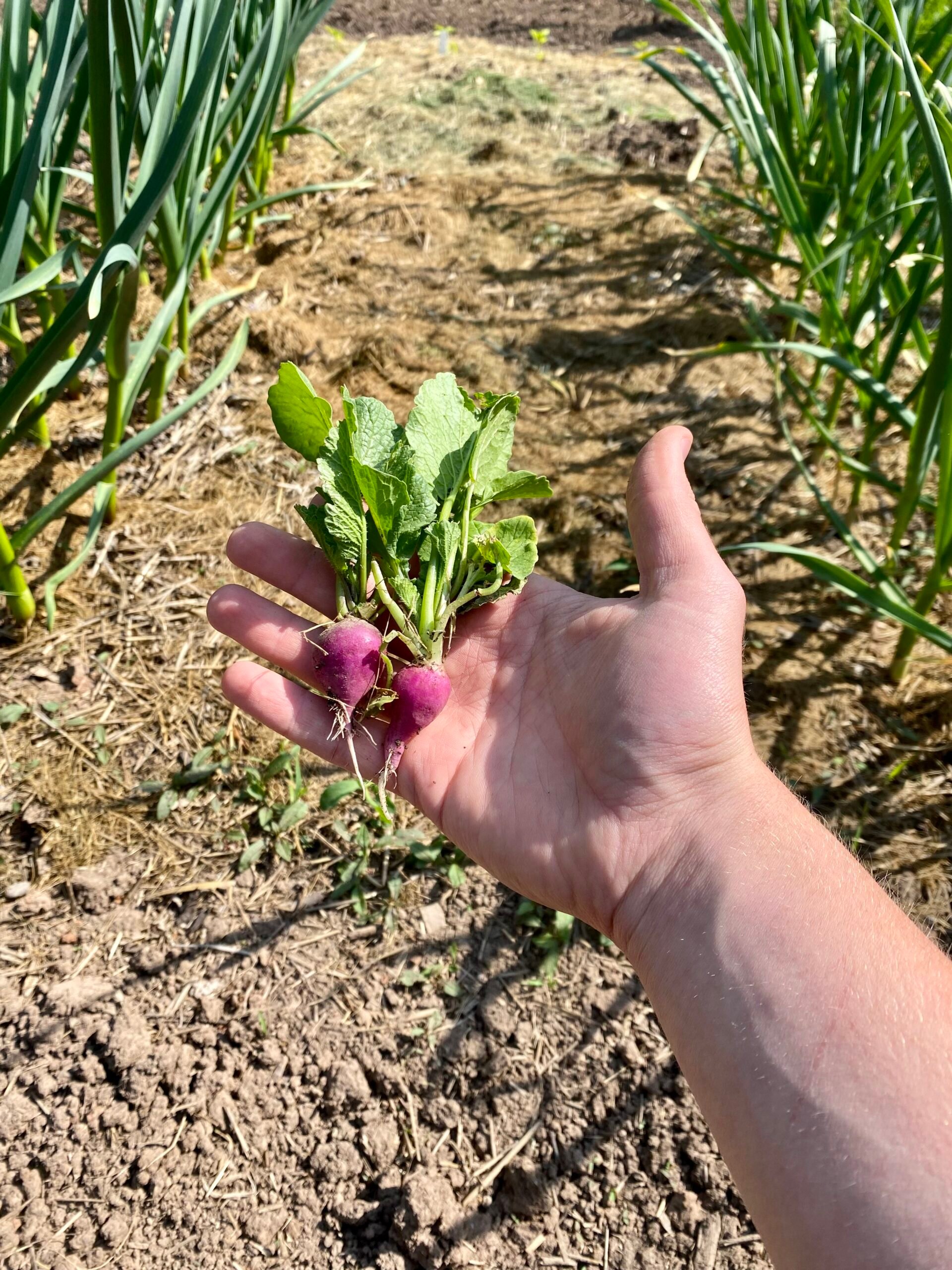
There are purple, pink, green, bi-tone, and even black radishes. Have fun and mix it up!
Don't Harvest All Your Radishes
If you leave some of your radishes in the garden they will likely grow huge roots, and create a flower stock.
These large roots can break up hard soil, and the flower stock will spread more radish seeds. In fact, some gardeners leave the radish crops to rot over the winter, increasing soil fertility.
Pin This!
Carmen says
Pretty sad that I failed at growing radishes! Something in the (3' raised bed) soil was gnawing them.
Josiah says
If at first you don't succeed, try try again. The last few years have been challenging in my garden but I always keep trying new plants and growing techniques. Maybe use some netting around your raised beds. Birds, mice, rabbits, and squirrels all like radishes.