
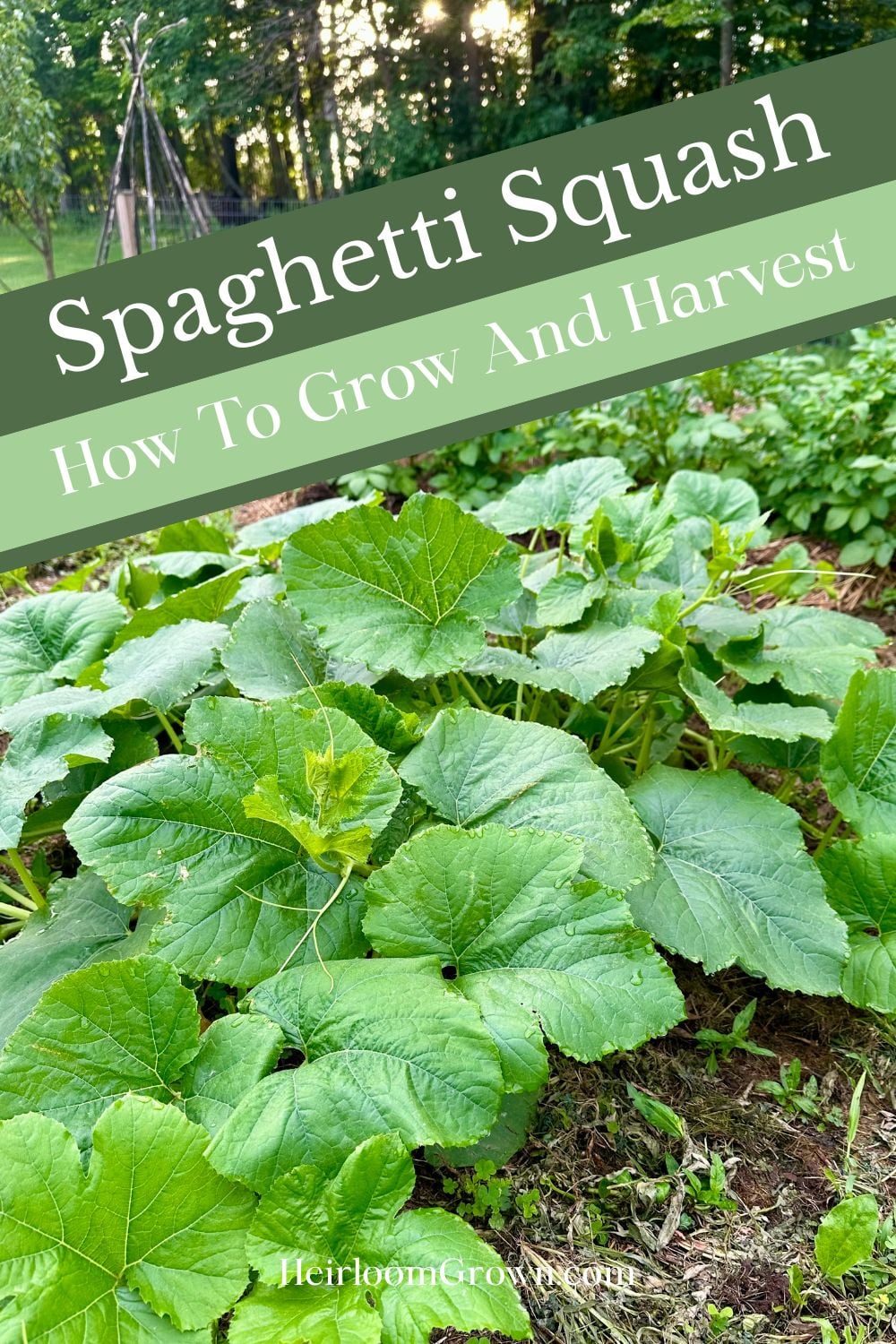
Spaghetti squash plants produce tons of storable squash that, when cooked, tastes and looks like spaghetti noodles. Here is my guide to growing spaghetti squash, from seed to harvest.
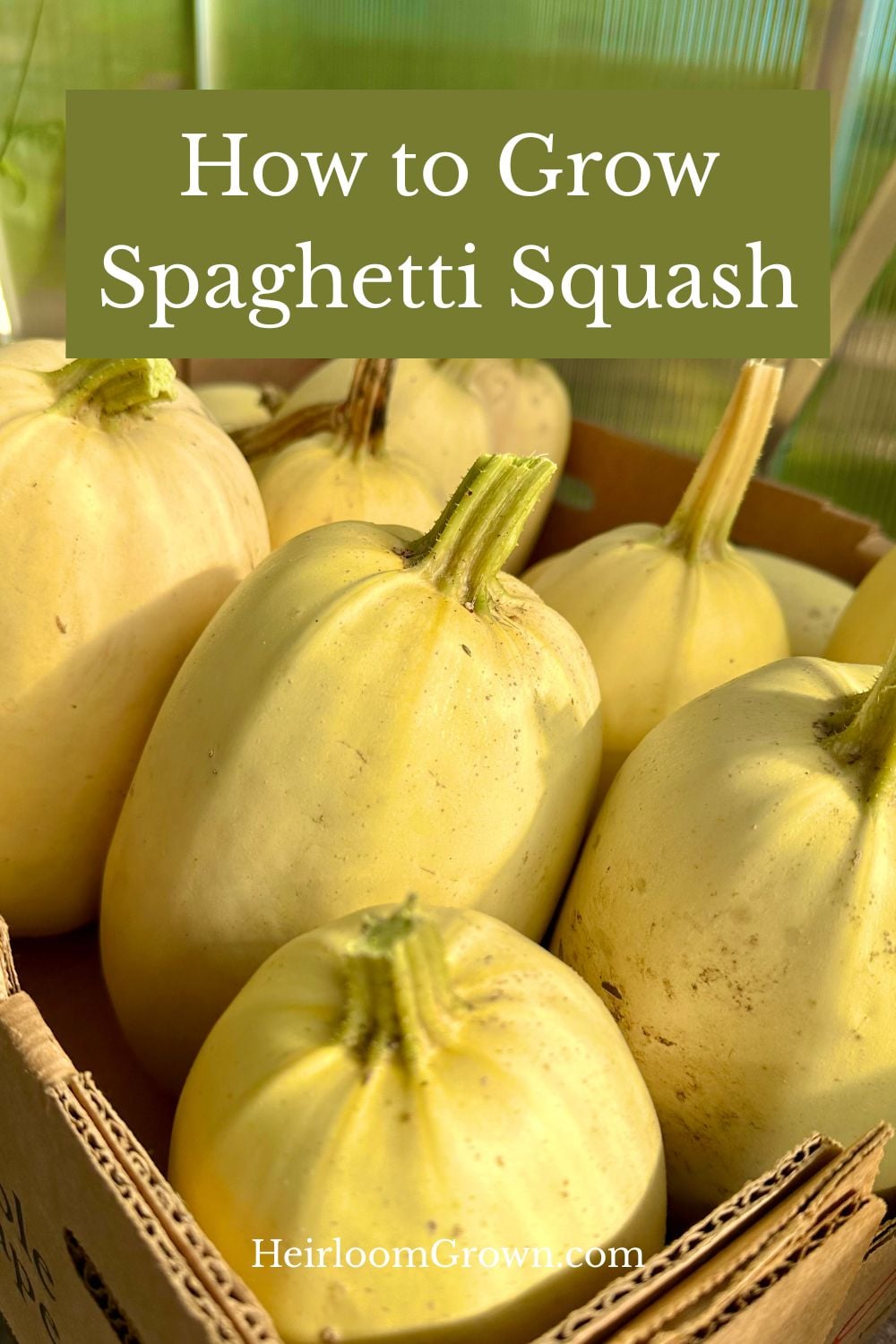
Spaghetti squash are, by far, the most bizarre squash that I have grown. Most squash are sweet, or turn to a mushy consistency when cooked, but not spaghetti squash.
Spaghetti squash is made up of "noodles" on the inside. You can see them when the squash is both young and mature.
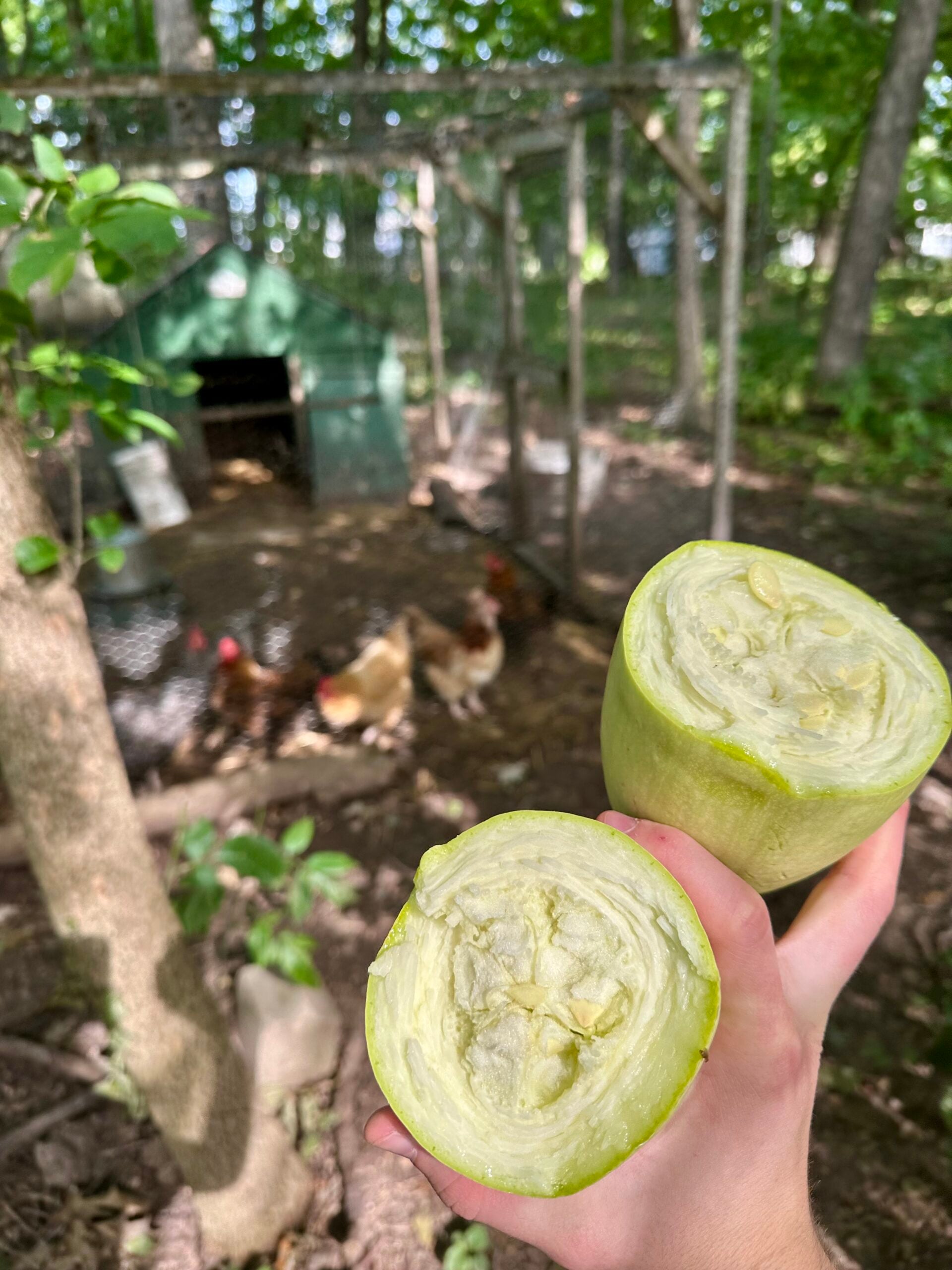
This squash is prized because it is a great low calorie, and low carb, alternative to traditional pasta.
After years of trying to grow my own spaghetti squash, I finally "cracked the code" and learned how to grow so much spaghetti squash that we can't even eat it all!
Choosing The Right Variety
In my struggle to grow spaghetti squash, my main foes were diseases and pests. My plants were being stunted by squash bugs and powdery mildew.
I quickly learned that not all spaghetti squash varieties are created equally. The variety that finally worked for me was Kinshi Noodle from Rare Seeds.
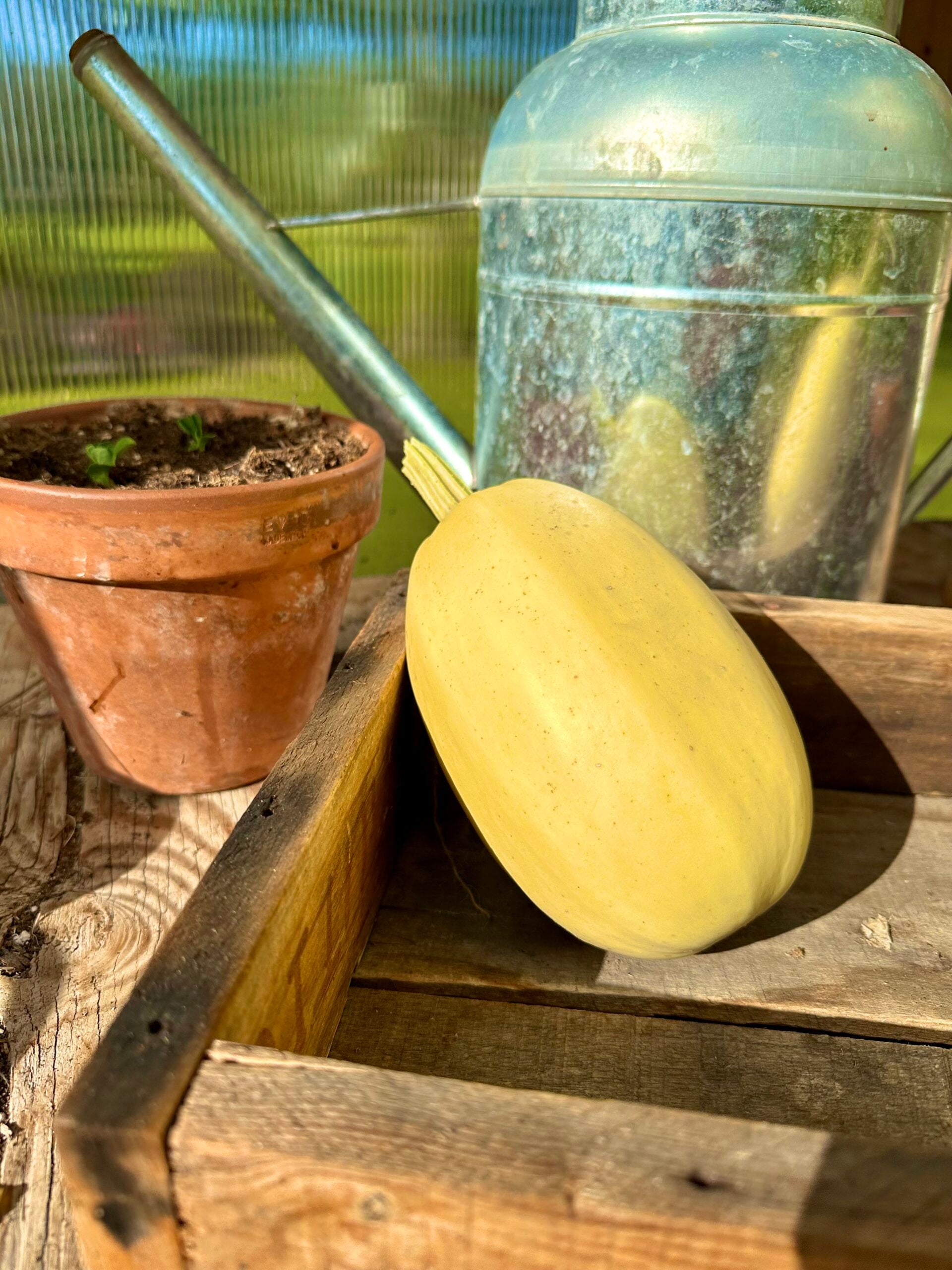
This variety grew vigorously in my garden and produced heavily. The fruit is large, bright yellow, and tasty.
Transplanting or Direct Sowing Spaghetti Squash
Since spaghetti squash takes 100 days to mature, you might think starting the plants indoors is the way to go, but I believe otherwise.
All squash plants have sensitive roots systems and transplanting them can stunt their growth. You don't get any benefit by starting them early.
The only case where you might gain some time is by starting the plants in soil blocks, but I highly recommend direct sowing your spaghetti squash.
When To Plant Spaghetti Squash
Always plant your spaghetti squash after all threat of frost has passed. I like to plant my spaghetti squash once the soil temperature is consistently above 60oF.
To Hill Or Not To Hill
The most debated growing technique of squash is whether you should grow the plants on hills or just directly into the ground.
I am on team hill for a few reasons. Most importantly because hilling allows the soil to warm more quickly than the rest of the garden soil.
I believe this is the number one reason to grow squash on hills. Squash plants love warmth, and the seeds can rot if the soil is too cold.
I do prefer to plant spaghetti squash in what I call hilled rows instead of round hills. The elongated hills utilize the garden space more efficiently and work great alongside trellises.
Grow Up To Save Space
The best way to save garden space is by growing all vining plants on trellises. Now, you have probably seen the viral cattle panel trellis on the internet, and let me tell you, These Are The Best Trellises Ever!!!
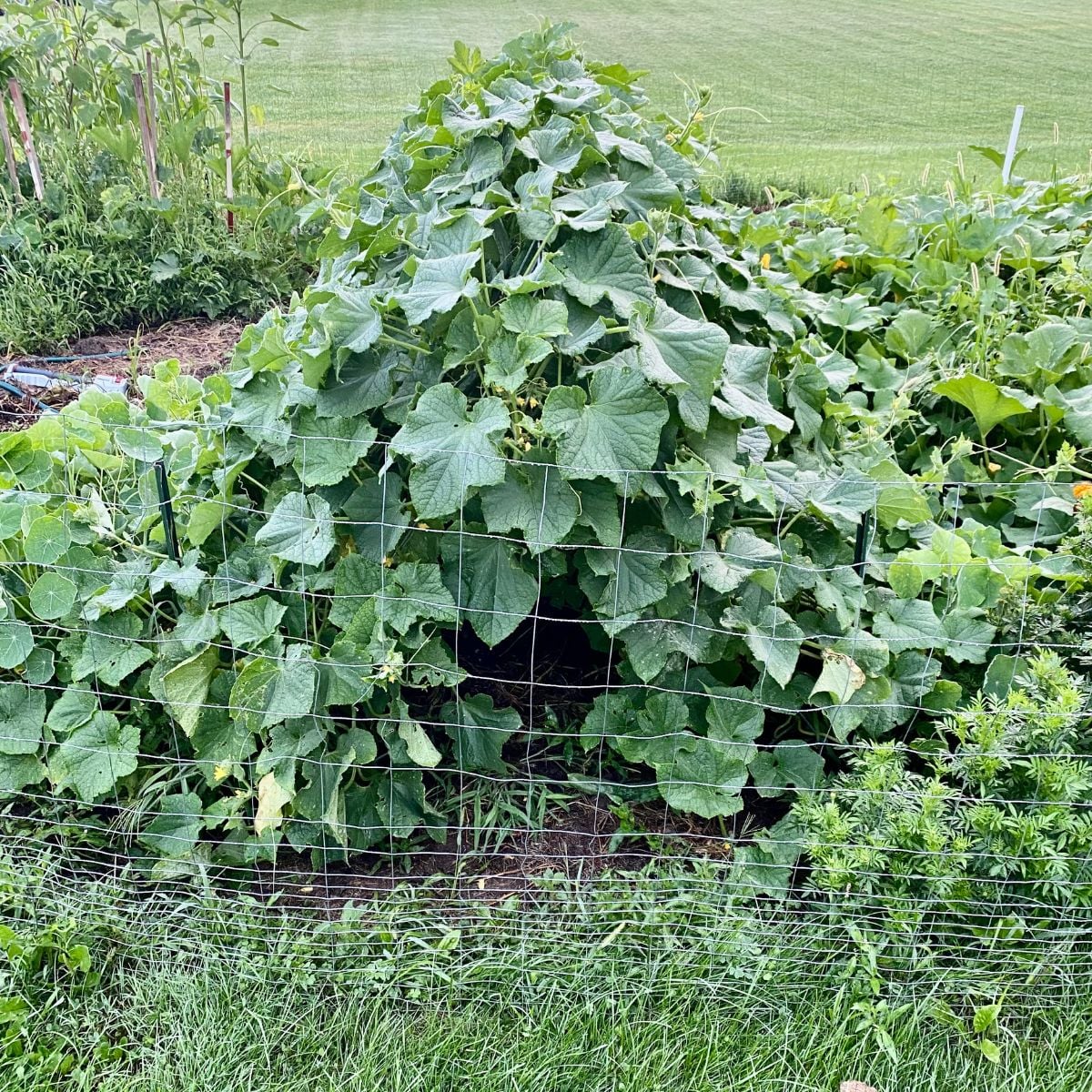
Your plants are healthier when grown on a trellis, your fruit doesn't rot because it doesn't touch the soil, and weeding is much easier.
Grow your spaghetti squash on a cattle panel trellis like this one. Make sure to set up your trellis when you plant your seeds, they grow fast.
Caring for Spaghetti Squash Plants
Keep the soil moist after you have planted your spaghetti squash seeds. Within a week or two you should see the first leaves of your spaghetti squash.
After a few weeks above the soil, your plants should finally grow their "true" leaves. Between planting time and harvesting, here are some of the ways you should care for your plants.
Fertilizing Spaghetti Squash
Like any plant, spaghetti squash can benefit from some fertilization. I like to amend my soil with compost before planting as a good boost for the plants.
I then fertilize the plants with fish emulsions every few weeks. Fish emulsions are best applied to the whole plant. You can also use any of these organic fertilizers.
Mulching Spaghetti Squash Plants
The best way to keep weeds away is by laying down organic matter as mulch. Grass clippings are a great mulch because they both smother weeds and provide nutrients for your plants.

Spaghetti Squash Pests
Cucumber beetles and squash bugs love to eat the leaves of spaghetti squash plants. If you don't keep these pests in control, your plants could have stunted growth.
A few pests is not a huge deal as most plants can grow normally even with one third of their foliage damaged by pests. However, here are some tips to keep the pests at bay.
Diatomaceous Earth
This is my number one go to for a safe pesticide. This white powder is made of ground up fossils and it kills insects naturally.
Diatomaceous Earth kills insects because is it razor sharp on a microscopic level. If you dust your plants with this powder it will kill most insects it comes into contact with.
I do use this pesticide sparingly as it can also kill beneficial insects, but it is a great way to quickly reduce your pest issues.

Wood Ash
Wood ash works similarly to DE. You can sprinkle it on your plant's leaves or make a circle on the soil around young plants to keep pests away.
Hand Picking
Another natural way to kill pests is by hand picking them off your plants and placing them in a pail of soapy water. This works great for large insects like squash bugs.
Pollinating Spaghetti Squash
Many gardeners overlook that the only way to get fruit from your garden is by pollination. While the bees should do most of the work, you can help them out.

If you notice that your plants aren't getting pollinated and setting fruit, you can hand pollinate them. This also is necessary if you are going to save seeds from your squash.
When To Harvest Spaghetti Squash
When you spot an orange pumpkin or yellow spaghetti squash in the garden, it is soooo tempting to just yank it out right then and there. Don't do it though...
These squash need a long time in the garden to mature and ripen fully. The longer you wait, the better! The only thing that will harm them is a frost, so you can leave them on the vine for awhile.
There are a few ways to tell if your squash are ready to harvest. First of all, the stem on the squash should be brown and dry. The squash's skin should also be very hard to pierce with your thumb nail.

Finally, your squash should be a nice matte yellow color like the picture above.
Once your squash have ripened you can cut them off the vine (leave at least an inch of stem). I like to brush off all the dirt and let them sit in the sun for a few hours to cure.
Once they are brushed off and dried, I bring them indoors. The squash will last for months in a cool, dry area of your home. Most basements are great storage spaces.
Spaghetti Squash Recipes
Now it's time to get cooking! Here are some great spaghetti squash recipes.
Spaghetti Squash Chicken Alfredo
Pin This!
Violet says
Such great tips! This spring I'm planning to start my first garden, and this encouraged me to try spaghetti squash!